Listen to Connecting the dots...
We only can do what we know to do…
We believe the information that follows may be helpful for you to gain a better understanding of how evidenced based interventions and supports can have a positive impact. We hope this space is a place that will help you gain a perspective of hope and discernment during the difficult, confusing, and sometimes very dark seasons of life.
This page includes sensitive information about suicide. It is not graphic, but may stir up uncomfortable feelings. We are sharing our story with intention and sensitivity. Our desire is to help you see suicidal ideation differently– through the lens of hope and compassion. Unfortunately, as statistics reveal, suicidal ideation is not as uncommon as we imagine it to be. Many people wrestle with suicidal thoughts and do not even realize they are doing so. Some feel isolated in their thoughts and become hopeless to the point of thinking their only choice is to end their life. The more we learn about SI, the more we can share hope and encouragement by helping bring the dark thoughts of hopelessness into the light.
Connecting the dots…

Since losing Jesse, I have been researching suicidology and have learned so much. As we already have touched on, the statistics of mental illness and suicide are staggering. This part of our story picks up with Jesse’s last year leading up to his choice to end his life.
In the fall of 2019, Jesse was a high school junior attending our local community college through dual enrollment, which was a great fit for him. That spring, COVID forced everything closed and Jesse was no longer able to attend his classes in person, and he continued virtually along with most of students in our nation. Jesse decided to become an essential worker and worked as a cashier at Food Lion during this time which enabled him to get out of the house and be productive. The summer of 2020, Jesse was coming up on his senior year and trying to decide what to pursue after graduation. During that time, Jesse had made some poor decisions (like many of us have), and he was feeling deep regret over them. It was during this timeframe that we noticed his behavior becoming alarming once again. This time, it had seemed to have escalated significantly from prior episodes. Jesse was making life choices inviting depression into his life. We will never know if his depression accelerated his behavior or if his behavior impacted his depression. It seems to me they go hand-in-hand.
Jesse agreed to undergo a comprehensive psychological evaluation. His testing was completed virtually through a recommended and highly reputable counseling center. However, it was a discouraging experience for all three of us. During the online post-evaluation appointment, Jesse was diagnosed with Major Depressive Disorder and General Anxiety Disorder. We received the diagnosis virtually and were given an email link to review the official testing results and documentation on our own. The three of us talked through the results the psychologist had given to us over the awkward computer screens. And then Steve and I were left to ourselves to try to figure out what to do to help our son who would be turning 18 in just a few months.
Our boy, who was exceptionally gifted and compassionate, but also very troubled at times, was given a potentially terminal prognosis on that day. And we were too ignorant to understand what the psychologist was sharing with us.
Human connection with authenticity and validation can often decrease the sense of hopelessness.
The wait for psychiatrists was still at least 6 to 8 weeks and only available virtually. The doctors on our referral lists were not taking patients at all. Jesse stated that he did not have any faith that it would help. I had a terrible experience with psychiatric care and Prozac in my 20’s and was deeply apprehensive about trying medication for Jesse because of my experience. Steve and I felt like we were trying to make incredibly difficult decisions without having the support of experts.
When you are diagnosed with cancer, a team of experts walks through the complex treatment plan with the patient. Serious mental illness treatment is often fragmented and approached very differently.
We thought Jesse’s challenges were not as serious as they were because everyone kept passing us on to try to find someone else.
Jesse also had started to show signs of getting better once again at this time. He felt validated. We were all in with our encouragement and support for Jesse, but we remained ignorant and confused.
Steve and I decided that it was probably best to stick with trying to be engaged and supportive for Jesse and pursue the only in-person treatment available, Neurofeedback. Neurofeedback had been recommended by the psychologist to see if it would provide Jesse some relief. We tabled the idea of looking for a psychiatrist, especially because we did not know how to find one available. Jesse also began online sessions with a new counselor from that practice. Unfortunately, Jesse once again said there wasn’t a connection forming with the counselor. He stopped going around the time he turned 18. No one from that practice followed up or walked alongside us to try to help us develop a plan for Jesse to get more comfortable in his skin. During the last 12 months of our son’s life, we leaned into Jesse’s world and did our best to be supportive and intentional. We would talk about the difficulties of transitioning into adulthood. We held Jesse accountable, sought opportunities for Jesse to thrive in, and did things together we knew Jesse enjoyed.
But we would never once talk about how awful and difficult it is to struggle with suicidal thoughts. We still did not know about safety plans.
We now know it is common for counselors trained in suicidal ideation to help their clients create a safety plan. We were not aware of how few counselors were actually trained to administer evidence based practices when there is a risk of suicidal ideation.
We encourage you to consider a safety plan…
This link provides an anonymous template that can be used to develop a plan. You can also find helpful information from Dr. Vince Watts in this video.
We do not know how much Jesse struggled with passive suicidal thoughts.
They are more internal and can be thought of as almost fleeting.
Significant change was taking place that summer. Jesse had just graduated with honors and decided to go to Old Dominion University to study music and sound engineering. We were in the middle of selling the house we had lived in for fourteen years. Steve and I were moving to North Carolina for a teaching job in Charlotte that I had been hired for. And a couple months prior to all of this, Jesse had started a labor intensive, full time tunnel maintenance job. He was hired as a helper and received a significant raise just a few weeks in because of his performance and work ethic. The one thing about the job was that it occasionally required working all night for maintenance needing to done that would impact traffic flow.

We now know, significant life events and poor sleep can have a dangerous effect on individuals with mental and/or emotional health challenges.
Looking back, I now can see so many of Jesse’s warning signals that accompany active suicidal thoughts. Jesse’s first sign that alarmed me during the few days before his death, was him appearing to try too hard to spend time with his friends. He wanted to be with them constantly and got frustrated if someone was not available to hang out with.
I also could tell that he was having difficulty when he practiced the piano. He was too amped up and got frustrated and he made mistakes that he usually would not make. He was beginning to talk a little edgy, and his presence felt unpredictable. Two days before Jesse died, we met at a Mexican restaurant for dinner. Jesse met us there on his motorcycle which was very common practice. We all had a wonderful time at dinner. Jesse was talking a little edgy but this one sign was not that unusual for him as a source of Jesse-entertainment. However, when we left the restaurant, Jesse pulled off on his motorcycle right in front of us, like he often would. But once he got going down the road, he was driving like a madman. It was so bad that we talked to him about it when we got home.
I now can recognize these behaviors that I have just mentioned as signs that Jesse was having active suicidal thoughts. He was showing us that he was struggling with the feelings of wanting to die.
Also, sometime during the last 48 hours of Jesse’s life, he told me he didn’t think he was ready to be an adult. I remember telling him that we are so proud of him and that he is getting ready to go to college and start living the life he has been preparing for. I assured him he had his whole life before him and so much promise. I didn’t ask Jesse if he was considering ending his life. I didn’t ask him what specifically was causing him to feel like life was too much. I just tried to assure him that he wanted to be alive. I reinforced his hopelessness.
We didn’t know to discreetly make sure he was not left alone until this episode of mania passed. We didn’t know safety plans were something we could devise to help Jesse be safe. We were doing so many things right. But we were blind and ignorant to the evidence based strategies that could help Jesse battle the seriousness of his mental illness.
We needed to help Jesse construct a safety net.
I have learned so much about signals, how to talk to others struggling with suicidal thoughts, and the many ways we can increase a level of safety during those critical times of active suicidal thoughts.
If we would have received a professional fact sheet with advocacy resources provided, our family would have been supporting Jesse very differently than we were.
- Our family would have had a safety plan for Jesse and openly discussed suicidal ideation.
- We would have been more conscientious about Jesse’s sleeping and eating habits.
- We would have contacted specific people who were in Jesse’s life at that time and asked for them to help keep an eye on Jesse until his episode of mania had passed.
- We would have found a mental health provider who specialized in working with with clients battling suicidal ideation and sought medication to help with his manic episodes.
- We would have been more diligent to continue looking for a counselor who Jesse connected with.
- We would have been more diligent to take safety measures in our home.
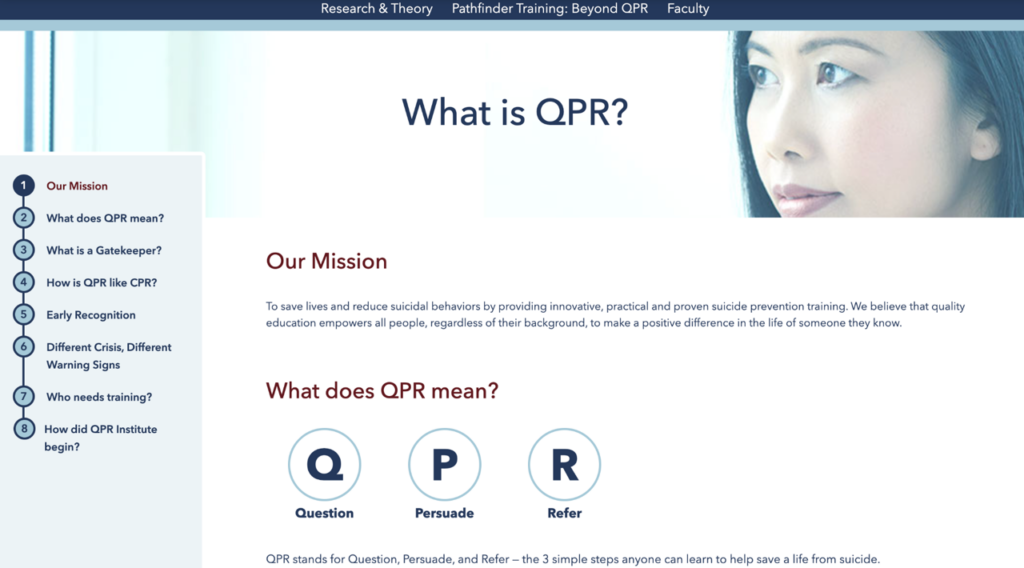
I am now a QPR Gatekeeper trainer so that I can try to help others build safety nets for the ones that need us to help them stay alive. The QPR website offers suicidal ideation training online and in person for individuals, groups, and several specialized categories of professionals.
QPR training provides evidenced based practices for emergency mental health interventions as well as current statistical information and treatment options associated with suicidality.
Question How we ask if someone is thinking about suicide must be non-confrontational or demeaning.
Persuade When we persuade someone to get help, we need to be ready to be their advocate.
Refer Referrals need to be places utilizing suicide ideation specific treatments.
Our family’s history places each of us at a higher risk of attempting suicide. My mother and Steve’s mother both lost sisters to suicide. Having relatives, friends, and loved ones who have ended their lives increases the risk of suicide attempt. Jesse had a teenage friend lose her life to suicide about four years before Jesse left us. Everything I have mentioned increases the risk of suicide. You can learn more about the risks in the mental health statistics section.
I personally understand the feelings of suicidal ideation. Even before I knew it was called suicidal ideation, I wrestled with occasional thoughts of not wanting to be alive. As you may imagine, these thoughts were very significant the first six months after we lost Jesse. I also have symptoms associated with Post Traumatic Stress Disorder (PTSD) from the trauma of Jesse’s death which brings an additional complexity to my emotional health.

But I do not have chronic mental illness, and when the ideations occur, my thoughts are almost always passive. I still need to take them seriously. I have a safety net. Our family is intentionally tender and supportive toward one another. I also have several friends that I check in with when I am struggling. Some of them do not even know when they are in the role of my support system. Others do during the very tough times.
I have been in therapy on and off for decades. I have connected with counselors who provide a safe and authentic space where I can let down my guard. They have helped me build strategies to choose healthy responses to difficult circumstances and hold me accountable for my behavior. I had a complicated childhood and have benefited significantly from strategies that model cognitive behavior therapy. I exercise regularly, keep track of my sleep habits, and maintain a healthy diet. I read my Bible, journal, and pray daily. I strive to be a strong advocate for myself and the people I love. I have learned to be a proactive thinker. I seek out opportunities that I know I will enjoy. And, sometimes, I make myself do them even when I don’t feel like it, because I know I need to get outside of my head.
This is my safety plan.
This is how I keep myself moving in the right direction. Grieving over losing Jesse is the most significant experience that has ever happened to me. The heartache never stops. I will likely seek counseling for the rest of my life because I know I need the support and accountability. I am doing the best I can and look at everything through the lens of Grace. You can visit the encourage section to learn more about strategies and resources to manage mental and/or emotional health.
We welcome your feedback on any of the information we have shared and would be honored to connect and have you help us build a community informing, encouraging, and connecting with others.